
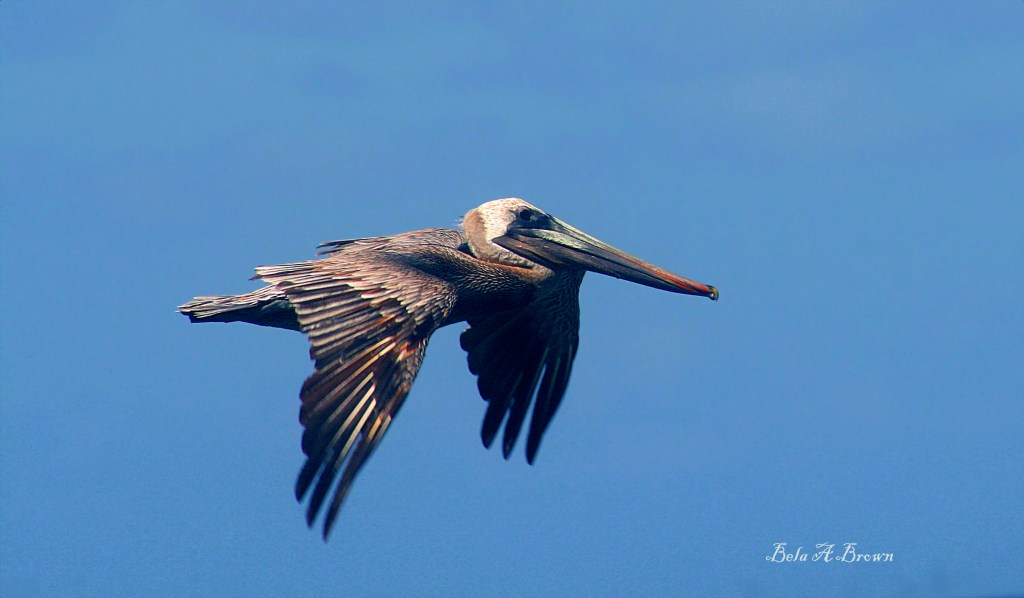
As I walked along the wide white sands of River Antoine beach on Grenada’s northeast coast, a stunning scene unfolded before me. A large bird with an ivory head and nearly six-foot wings stretched out, supported by a curled neck and a big bill, flew across the hazy blue sky, reminding me of a bygone era.
A flash of silver light caught the creature’s yellow eye, causing it to fall into the blue water from thirty feet above. Moments later, it surfaced with a stunned fish in its pouch and water spilling from its bill. The bird tilted its head back and swallowed the fish.
The bird in question is an adult Caribbean Brown Pelican, scientifically known as Pelecanus occidentalis occidentalis. This subspecies is one of five that look quite similar, with the main difference being their geographical locations. The Brown Pelican can be found along the Pacific and Atlantic coasts of North and South America, as well as in the Caribbean and Galapagos islands. This conspicuous bird has a prehistoric appeal, having changed very little over the past 30 to 40 million years.
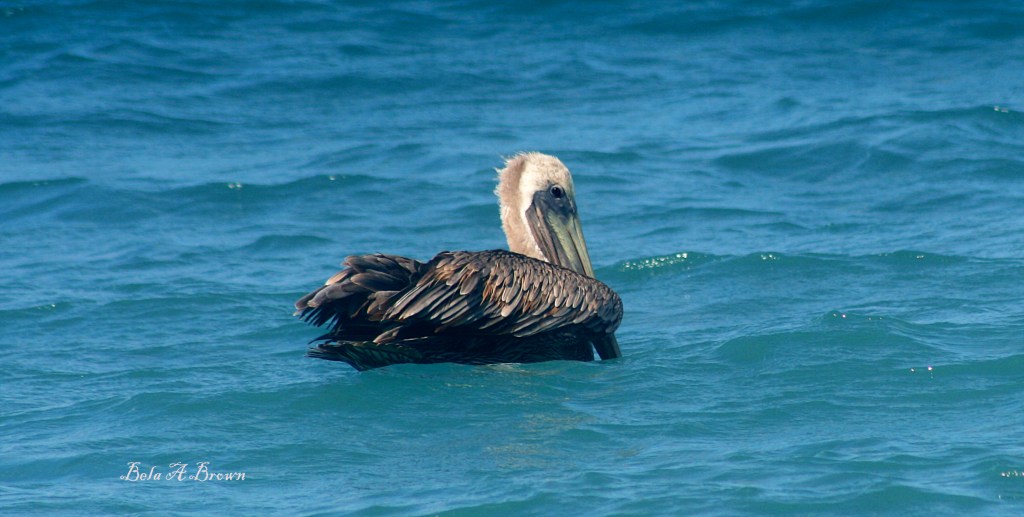
As I looked at the empty beach, I saw two more pelicans. They were preening their feathers with their long bills, which makes their feathers shiny and helps keep them waterproof. One of them flew up, showing its white belly, a sign that it was young. This lighter color helps camouflage young birds when seen from below.
After observing the bird for twenty minutes, my curiosity was piqued by the peculiar shape of its bill. This eleven-inch pouched bill appears unusual, yet I rarely saw the pouch open for an extended period. Contrary to popular belief, the pouch doesn’t store food; it functions more like a fishing bucket attached to the throat. Fascinatingly, while feeding, it can hold up to three gallons of water—three times the capacity of its stomach. Although this water is expelled quickly, the bird faces threats from seagulls and frigatebirds that frequently swoop in to snatch the fish within. This leads to the question: why possess such a large pouch? “Dear Mr. Pelican, are your eyes bigger than your belly?”
Surely, if all birds evolved their bills to suit their needs, then the extra water they take in while diving likely serves a purpose beyond being a nuisance? To be fair, the pouch also has obvious roles, like feeding its young and providing cooling on hot days when it expands.
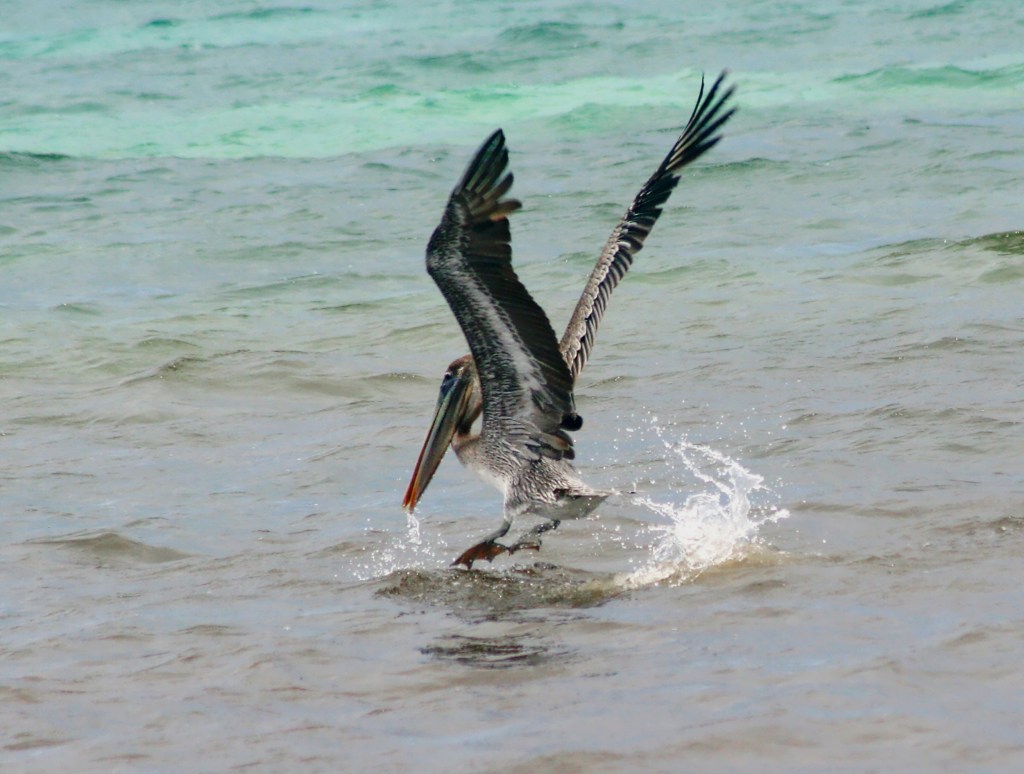
Watching the adult bird glide smoothly across the water, in sync with the waves, I was amazed by its rather shocking diving technique, which is akin to an inert object dropping into the water from a great height. The air sacs in its body soften the impact when it drops from heights of up to 60 feet and help it stay buoyant.
Although the Brown Pelican has adapted to its environment for millions of years with little change, today its habitat is under threat. In the last century, the Californian Brown Pelican has faced reproductive failures due to DDT exposure. Although harmful chemicals are banned in developed countries, Brown Pelicans in developing nations still face pesticide exposure and other dangers. These include habitat destruction from coastal development, overfishing, and even abandoned fishing lines that can cause painful deaths. Additionally, climate change will most likely raise sea levels, flooding the low-lying islets where they nest. Human activity has harmed species like the Brown Pelican, leading to serious consequences. We need to recognize our impact, take responsibility, and strive for change before it’s too late.


 BELA'S BIRDS