
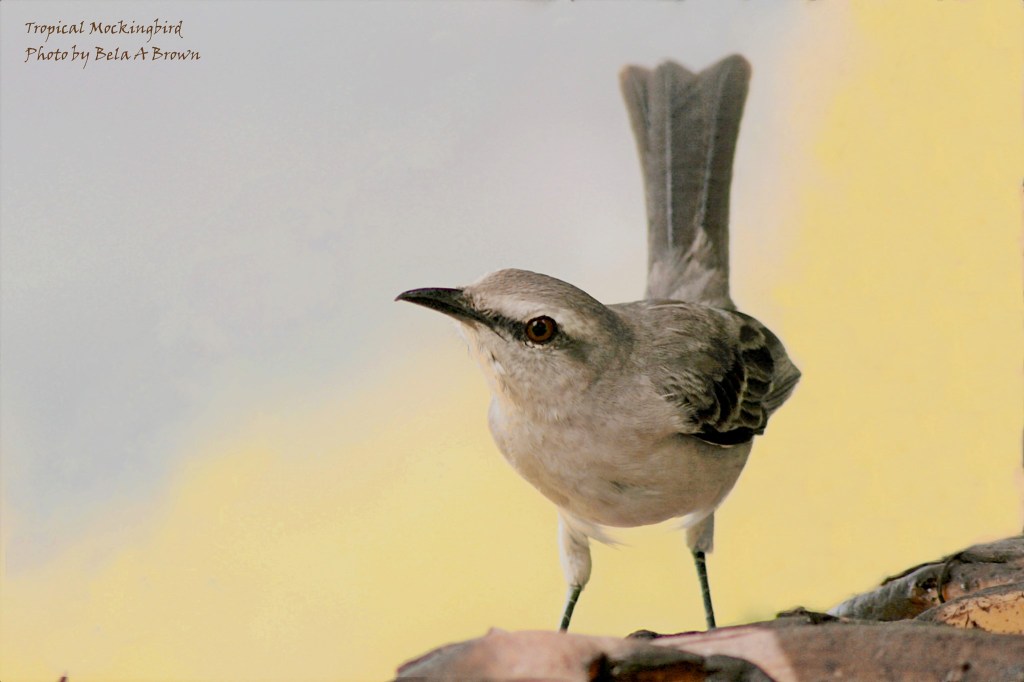
I really like Tropical Mockingbirds. Their stylish grey and white feathers and bold personalities make them unique. Their smart eyes seem to say, “Hey, human, I’m watching you…”
Yes, they are always watching and can remember you. A 2009 study by biologists at the University of Florida found that Mockingbirds can recognize and remember the faces of people they see as threats to their nests.
The research involved student volunteers who approached and touched 24 nests for four days, wearing different clothes and coming from various directions. As the birds recognized the volunteers, they became more aggressive, even attacking them at times. Yet, the birds stayed calm when approached by new people. Professor Doug Levey, a biologist at the University of Florida, noted, “It took just sixty seconds for Mockingbirds to learn to identify different individuals among all other students on campus.”
Tropical Mockingbirds, or Mimus gilvus, can be found from southern Mexico to northern South America, and from Brazil’s eastern coast to the southern Lesser Antilles, all the way up to Antigua. They have also formed populations in Trinidad and Panama after being introduced there.
The species prefers open habitats and thrives in a variety of environments like beaches, wetlands, farms, urban areas, gardens, and backyards. They are often seen sitting on exposed shrubs, tree tops, telephone lines, fences, and moored boats.
Mockingbirds can often be seen catching swarming termites or foraging on the ground, captivating spectators with their graceful wing flashes in a unique ‘archangel fashion’ while making occasional ‘tcherk’ calls.
Tropical Mockingbirds are related to the Northern Mockingbird, Mimus polyglottos. Although experts usually see them as different species, sometimes they are considered the same.
The resemblance between them is quite striking, but the Tropical Mockingbird sets itself apart with its wings and primary feathers carrying less white. Their behavior, songs, and calls are so similar that it’s hard to tell them apart, and in areas where they coexist, interbreeding occurs, resulting in hybrid offspring. Unlike their northern relatives, Tropical Mockingbirds do not focus much on mimicry. Nevertheless, some individuals can still impress with their ability to imitate sounds, including a perfect version of the Brazilian national anthem!

Mockingbirds have bold personalities that make them stand out among birds. They are fearless and can intimidate even brave opponents when threatened, facing any danger, whether it’s a cat, dog, or hawk, using their beaks, feathers, and swooping feet to defend themselves.
Yet, despite their fierce behavior, Tropical Mockingbirds seldom get into fights with each other. Instead, they mark their territories and attract mates with unique displays. Males defend their area year-round, participating in musical battles that can last for days and nights.
Nighttime songs show the presence of a dominant male to other birds. In territorial fights, their songs become less creative and more about volume and repetition. This repetition asserts male dominance, particularly among the strongest males. Nonetheless, true superiority is indicated by the creativity and consistency of their songs, with older males singing more consistently.
Have you ever heard a Mockingbird sing? I once saw a male Mockingbird choose a spot in our yard to mark his territory. The bird sang continuously for hours, only stopping briefly to eat. His survival depended on his constant singing, proving his strength. Any hint of weakness could let rival males invade his territory, risking his chance to find a mate and start a family. So, he kept singing strongly, working hard to win the fight for dominance.
Males and females both sing, and they look alike, making it hard to tell them apart. But, males are the more creative singers, with a wider variety of sounds and consistent songs. Their melodies include over one hundred syllables, with clear whistles, lively trills, and distinct staccato phrases.
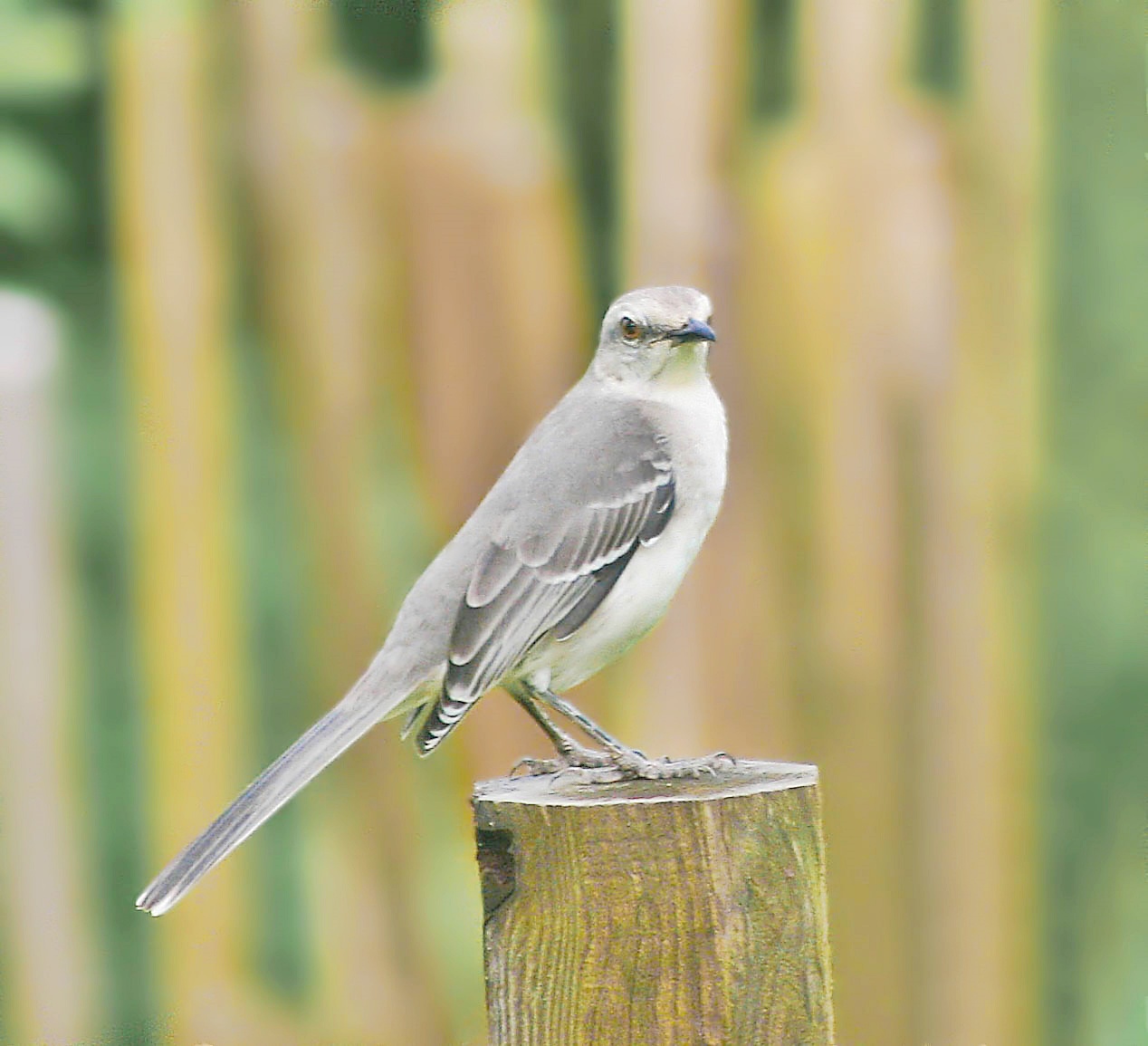
Female Mockingbirds prefer smart males with big song collections, and it’s quite amusing to see how males try their best, singing their best tunes to impress potential mates.
Once paired, couples engage in playful chase, making various sounds while searching for the ideal nest location, typically a few meters off the ground. Males sing both before and during mating. Afterward, both the females and males work together: females line the nest, while males build the outer structure using twigs, leaves, and other found materials.
Tropical Mockingbirds are usually monogamous and often work together to raise their young. They breed throughout the year, but activity increases during the rainy season when insects become more plentiful.
Tropical Mockingbirds are skilled breeders, raising several broods each season. Females typically lay 2-3 eggs and carefully incubate them for 11-15 days on their own. Males actively protect the nest and territory from threats like domestic cats, iguanas, and mongooses. In times of danger, male and female mockingbirds work together to guard their nest, and other mockingbirds may help them. After the eggs hatch, both parents are care for the young birds.
As the young grow up, the males feed and teach the young ones to fly, while the females build a new nest and care for more eggs. Interestingly, the older fledglings often stay to help raise their younger siblings.
Juveniles are not born singing; they start with baby talk and learn to sing by copying adults. They then create “plastic songs,” which mix adult sounds with their own phrases, along with some babbling. As they mature, their singing becomes steadier and more powerful, helping them mate and reproduce successfully.



 BELA'S BIRDS