
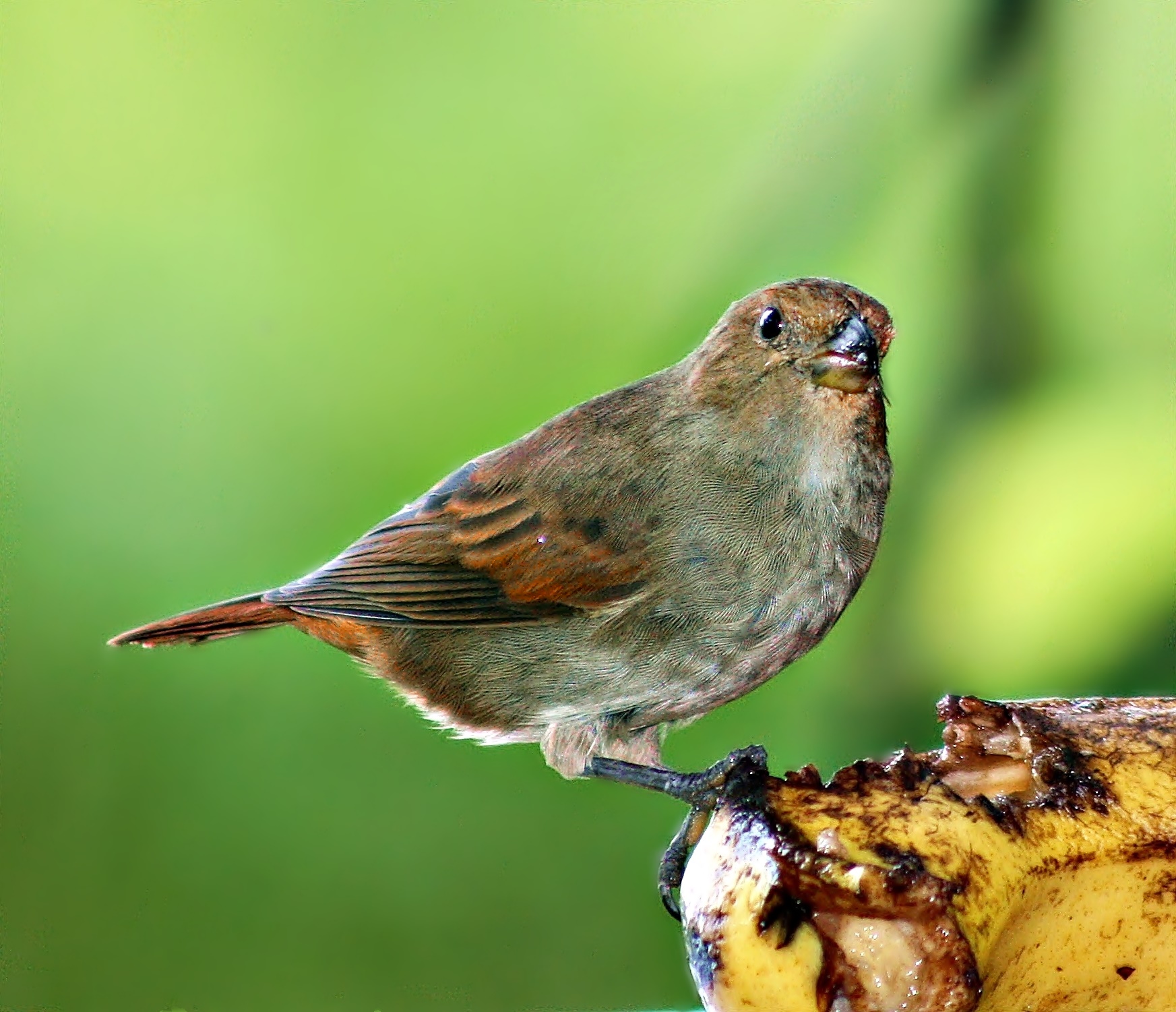
The Lesser Antillean Bullfinches are seed-eating birds in the Tanager family (Thraupidae). They are closely related to the Galapagos Finches, which helped inspire Darwin’s theory of natural selection.
Although Lesser Antillean Bullfinches have strong beaks for crushing hard seeds, they are flexible eaters that enjoy various foods like ripe fruit, nectar, and insects. They use smart techniques to feed, such as biting small holes in flowers to get nectar, using their feet to hold and eat fruit and seeds, and hunting insects with their strong mandibles.
The Lesser Antillean Bullfinch is found in the Lesser Antilles, except in the Grenadines. It can also be found in St John and St Croix in the Virgin Islands, and will most likely spread to other islands.
There are a staggering eight recognized subspecies of Lesser Antillean Bullfinches found in various habitats, from sea level to mountains, including gardens, dry scrub, mangroves, and rainforests. These subspecies have slight differences in size and color; some are more grey than black, some have smaller beaks, and others have red undertail coverts or black feathers.
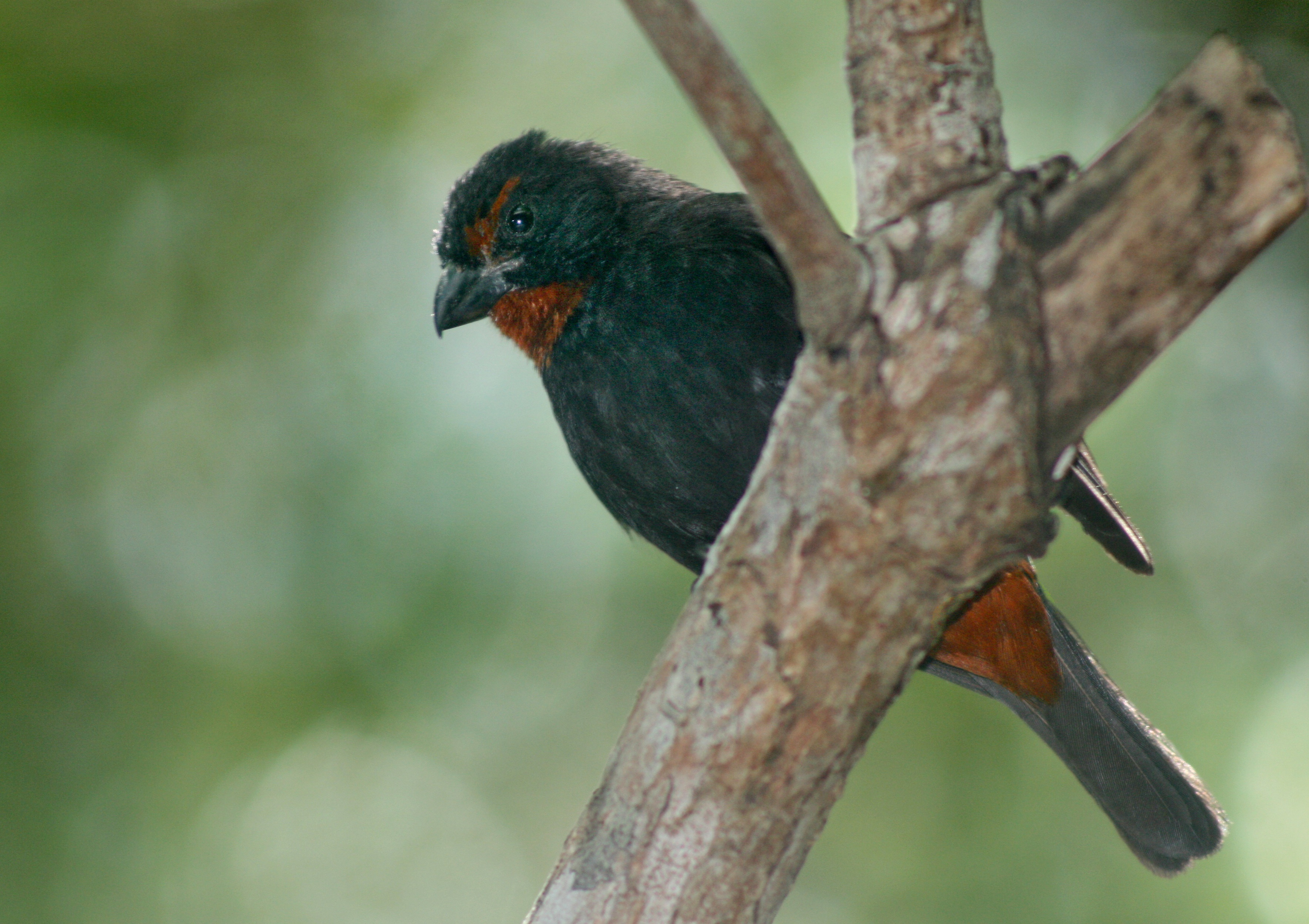
Lesser Antillean Bullfinches show differences between males and females. Males have shiny black or dark gray feathers with red on their faces and throats. Females have warm gray undersides and rusty-brown wings and tails, with rusty orange accents.
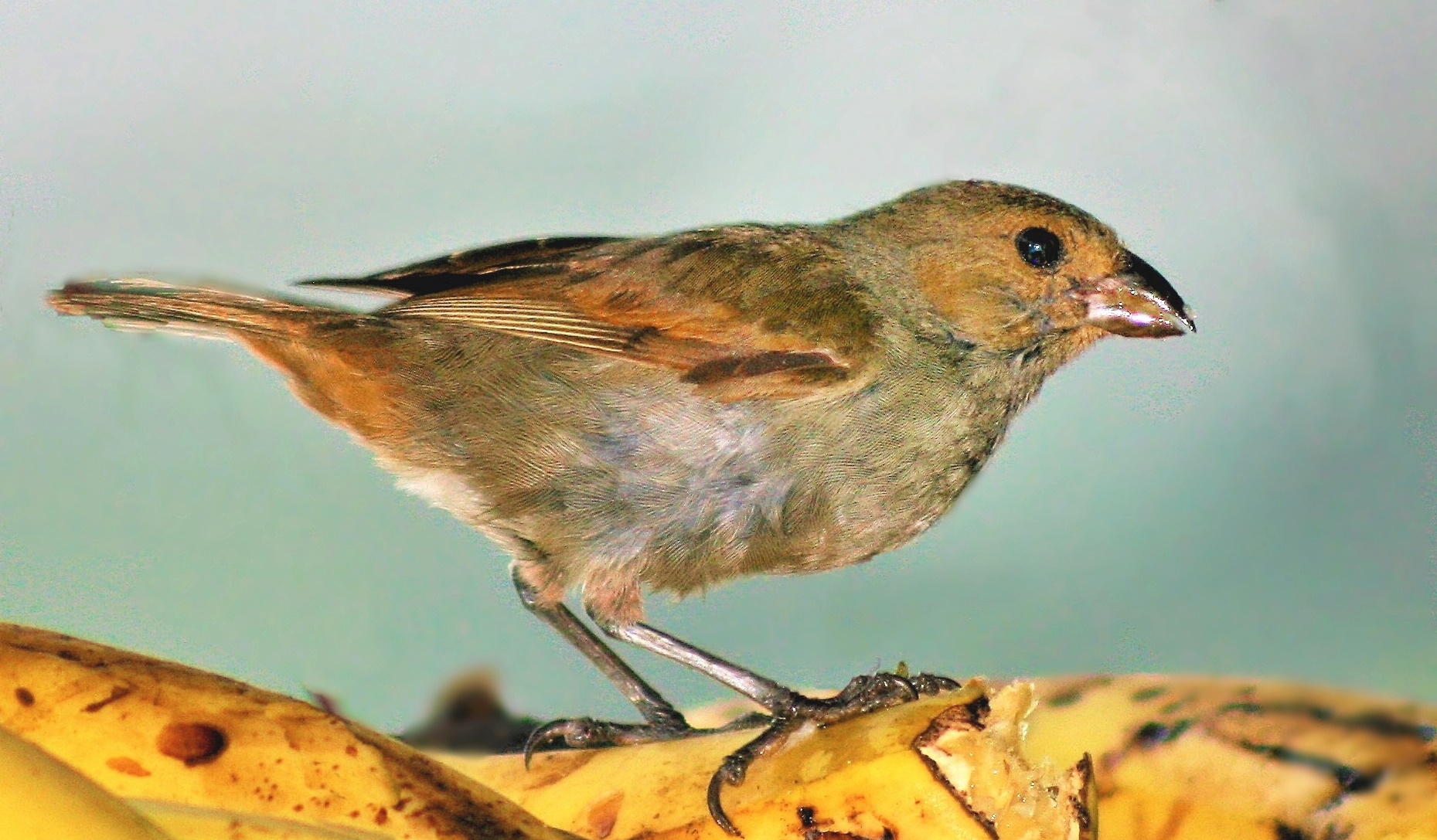
Immature birds initially resemble adult females, later transitioning through a distinctive calico phase before reaching adulthood. Notably, the males and females are identified by separate names on some islands; for instance, in Dominica, the male is referred to as “Pere Noir,” while the female is known as “Moison.
Lesser Antillean Bullfinches mainly look for food in trees or bushes but also eat grass stems on the ground. Their simple songs help identify them, featuring short trills, high “wheet-wheet-wheets,” a soft “tsee,” and a sharp “chuk.”
Those living in suburban areas are comfortable around people and can often be spotted on outdoor dining tables or near bird feeders. This species is also known for its playful behavior of taking small packets of sugar and nuts from restaurant tables!
Females are brave and skilled foragers that use intelligent methods to find food. They often go into homes looking for food and face challenges to reach their goals. They rarely go alone, as males usually join them, benefiting from their partners’ fearless behavior.
Unlike the shy males, the bold females are always in our garden, enjoying the feeders and flowers. They quickly react to pishing and often approach, showing curiosity and playfulness. Pishing is a high-pitched bird call that attracts small birds. I use sounds like psst-psst, pish-pish, chit-chit, and kissing noises to draw in local tanagers and finches.
Females are very determined when searching for food. When nesting, they protect their seed stash and will chase away other birds, even other female bullfinches. Although females are aggressive foragers, they don’t claim territory. Males, on the other hand, have a more relaxed foraging style but are quick to defend their territory.
The species breeds throughout the year, peaking from February to August. Males show off their red throats to attract mates. Once a mate is found, the male protects the nest and stays near the female while she lays and incubates the eggs.
The nest is constructed 2 to 5 meters (6 to 16 feet) off the ground, typically in a robust shrub, hedgerow, or low tree. It features a dome shape with a side entrance and is fashioned from dried grasses and twigs, lined with soft plant materials, particularly dried banana leaves. These birds often opt for nesting locations near human residences to deter other birds, mongooses, and snakes from approaching. Still, this strategy can backfire, as nearby homes often harbor cats and dogs that become alerted by the incessant and loud calls of the chicks demanding to be fed.
We recently had a pair nesting within the hanging ferns on our veranda, where they successfully raised two exceptionally vocal and demanding chicks. One fledgling managed to fly out of the nest without incident, while the other fell to the ground, prompting our cat to swiftly pursue and capture it. My husband and I quickly intervened, successfully rescuing the chick and placing it on a palm leaf to aid its parents in locating it. The father soon discovered the chick, diligently returning to feed the distressed fledgling before relocating it to a more secure spot.

 BELA'S BIRDS