

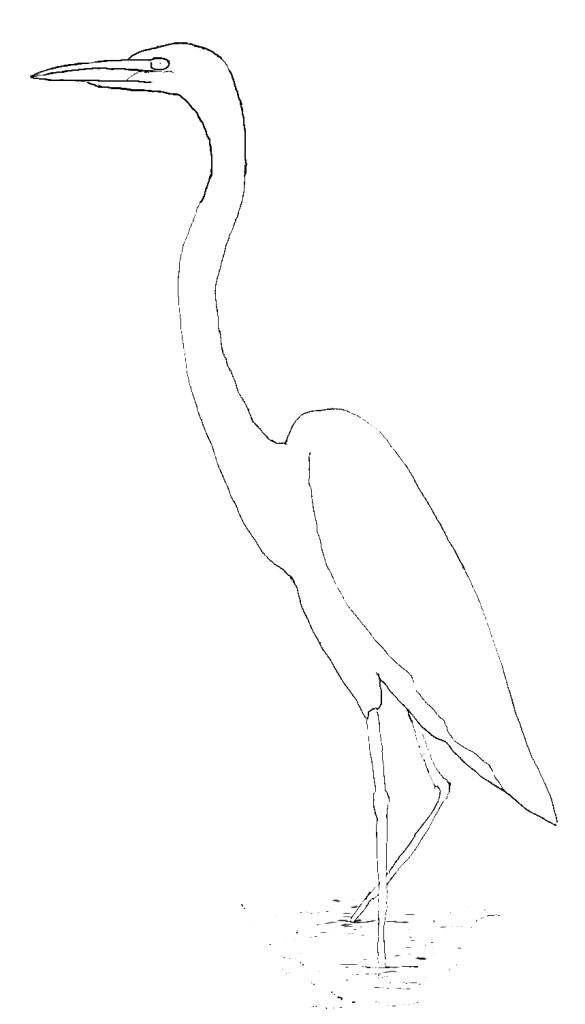
Standing at an imposing height of three feet, the Great Egret ranks second in size only to the Great Blue Heron. In specific areas of the Caribbean, it might be confused with the Great White Heron, a variant of the Great Blue Heron. However, the Great White Heron is identifiable by its shorter yellow legs, more robust neck, and slightly larger stature.
The classification of the Great Egret has been debated for a long time. Originally classified under its own genus, Casmerodius, evidence from its physical features, behavior, and biochemistry has led to its reclassification with the great herons in the Ardea genus. Now, it is scientifically called Ardea alba, which means ‘white heron’ in Latin.

The Great Egret has four subspecies found in temperate and tropical regions worldwide. In the Americas, the subspecies Ardea alba egretta breeds from South Canada to Maine, extending to California, Mexico, the Lesser Antilles, and as far south as Chile and Argentina.
The Great Egret is partially migratory, with individuals from cooler regions relocating to warmer areas during the winter months. Their migration occurs in small V-shaped formations, in flocks, or individually. Following the breeding season, juvenile egrets from northern North America migrate to southern Alaska and Newfoundland before heading southward for the winter. Similarly, egrets from South America travel to Tierra Del Fuego and the Falkland Islands before returning to more temperate regions.
Great Egrets are skillful predators that use a variety of foraging techniques, including slow stalking, foot-stirring, and hovering above the water. When necessary, they will not hesitate to appropriate food from another egret. Their diet is primarily composed of small fish, shrimp, crayfish, frogs, lizards, snakes, and even small mammals.

BREEDING SEASON: A DRAMATIC TRANSFORMATION
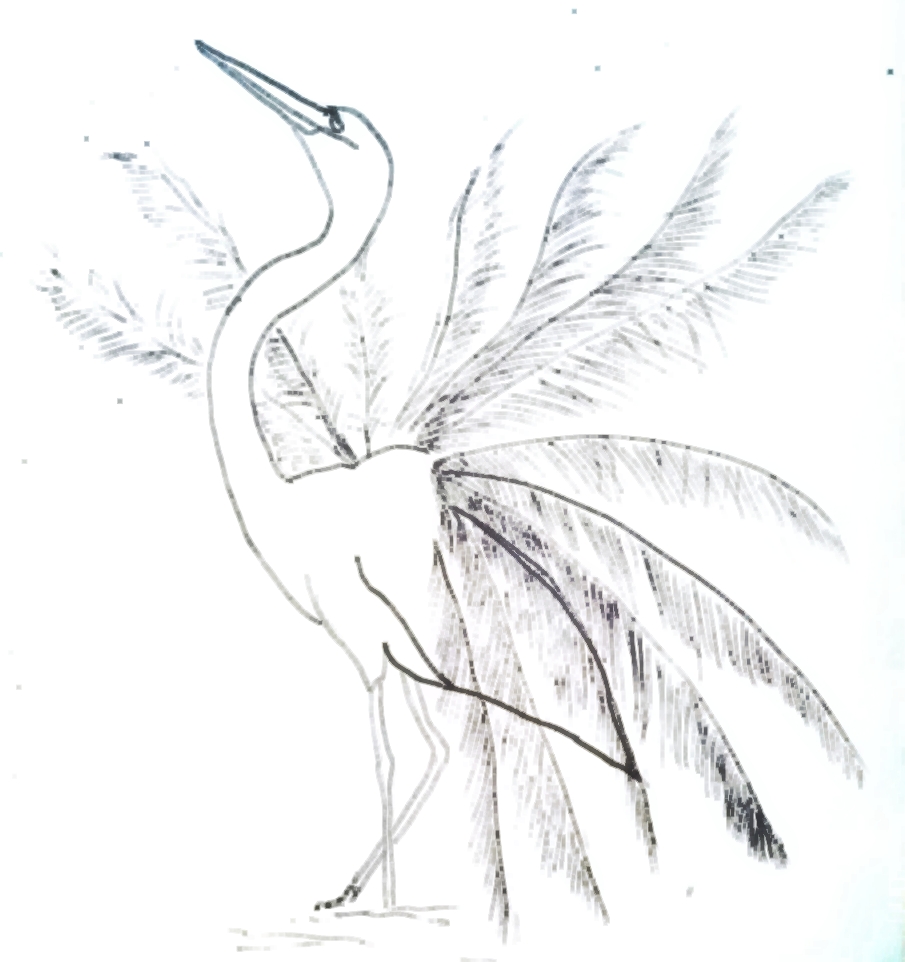
The breeding season brings an amazing change to the Great Egret. During this time, the Great Egret shows off its long, silky feathers called ‘aigrettes’, creating a lovely sight. Its yellow bill turns to a bright orange or deeper shade, while the area around its eyes changes to a bright lime-green. Additionally, a vivid red circle appears around its yellow irises. Clearly, this transformation serves to make the bird an irresistible beacon for potential mates.
Although Great Egrets are usually calm, their behavior changes during breeding season. Males shift their focus from foraging to defending their territories with eye-catching displays. To attract females, males perform Stretch displays, while females shake twigs for attention. Unmated females fly over males’ territories, making playful sounds as they try to land, often being pushed away. Forming pair bonds is a complicated process, lasting up to seven days, during which the normally bold females must act submissive while helping build the nest. Only after this time do the bonds form, with couples greeting each other with affectionate sounds. As their relationship grows, females gradually stop being submissive and start to assert themselves in the partnership.
Great Egrets are creative with their nesting. Instead of building nests high in trees to avoid predators, they place them above alligator-filled waters in the Florida Everglades, using alligators to keep out animals like raccoons.
They usually lay three eggs one day apart, which causes them to hatch at different times. Interestingly, they only occasionally incubate the first egg on its first day, allowing the first two chicks to hatch within the same day.
PARENTAL ROLES IN SIBLICIDE
Great Egrets sometimes engage in siblicide when food is scarce. In the Florida Everglades, they are willing to sacrifice the weakest chick, giving it to the alligators below as a strange form of protection. Dr. Douglas W. Mock, a behavioral ecologist at the University of Oklahoma, studied these hatchlings and was surprised by their intense fights. He thought the parents would stop such behavior, so he tried to separate them with pillows. However, when he later observed chicks in the wild, he saw similar aggression, with birds fighting 4 to 5 times a day, sometimes having over 100 sparring exchanges, while their parents watched quietly, allowing the chaos to continue.
Parents significantly influence siblicide, often unintentionally. Dr. Mock’s research shows that they provide more resources to the first two eggs, giving them higher testosterone levels, which puts the third egg at a disadvantage. Once only two chicks remain, the fighting stops. Interestingly, when food is plentiful, all three chicks can survive.

THE PLUME BLOOM: HUNTED TO NEAR EXTINCTION
The Great Egret was nearly extinct during the 1880s ‘plume boom,’ when a woman’s social status was judged by the number of plumes in her hat – more plumes meant higher status. This resulted in a harmful industry of hat makers and plume hunters, who killed whole egret colonies to meet the demand for these delicate feathers. As a highly sought-after species, Great Egrets were killed by the millions, leaving their young to starve.
Thankfully, two women from Boston, Harriet Hemenway and Minna Hall, realized that the fashion trend of using Great Egret plumes was harming the birds. They founded the Massachusetts Audubon Society and encouraged others to stop using plumes. This led to the creation of the National Audubon Society, which helped pass the Migratory Bird Treaty Act. This act banned the capture and trade of migratory birds, including egrets, effectively ending the plume trade and saving the Great Egret from extinction.

In 1953, the Great Egret became a symbol of bird conservation and the National Audubon Society, whose logo features a white bird flying through the sky, its long legs trailing behind, while its wide wings capture the hope of a bright future.

 BELA'S BIRDS