

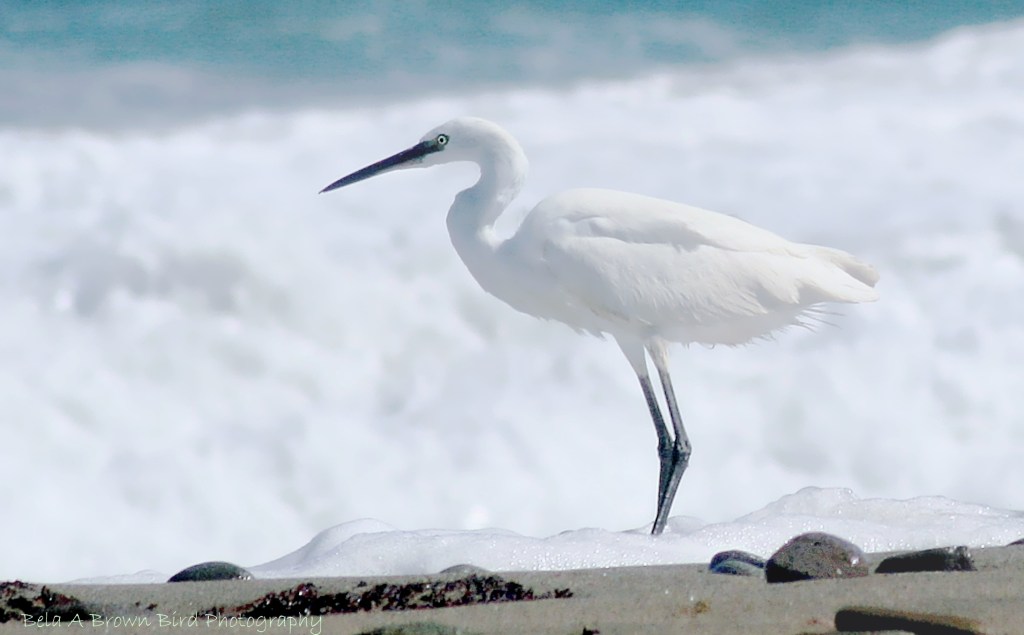
Recently, I watched a Little Egret foraging along the shore in Grenada – its beautiful form shone in the midday sun as it moved gracefully along the surf line, catching small crustaceans stirred up by the waves.
A recent coloniser
Found in the warmer regions of Europe, Asia, and Africa, the Little Egret is a migratory heron that has recently colonized the West Indies. It was first seen in Barbados on April 16, 1954, by ornithologist James Bond, arriving as a lost migrant from West Africa. By 1994, nesting pairs were found at Graeme Hall Swamp in Barbados, marking it as the first breeding site for these egrets in the West Indies. They are believed to have moved north with Snowy Egrets, their American counterparts, leading to their successful spread across North America. Today, Little Egrets can be seen in eastern North America, northeastern South America, and the West Indies, with new nesting colonies discovered in Antigua and the Bahamas.
Little Egrets have thrived in the New World due to the many wetlands, marshes, and coastal areas that provide good nesting sites and resources. They compete with the Snowy Egret, also found in the West Indies, as both look for food in shallow waters and wetlands.
Little Egrets and Snowy Egrets look similar, making them hard to tell apart; they are small, all-white herons with dark bills and yellow feet. Nevertheless, closer inspection shows clear differences between the two species:
Little Egrets are noticeably larger, with longer necks, thicker all-black legs, a stronger bill, and less bright yellow slippers.
Adult Little Egrets have grey skin around their eyes, while adult Snowy Egrets have bright yellow skin in the same area. Little Egrets also do not have the bare patch of skin at the base of the bill that is found in Snowy Egrets.
During the breeding season, Little Egrets showcase yellow lores and two lanceolate plumes atop their heads, unlike the bright reddish-orange lores and luxurious, filamentous tuft crest of their American counterparts. Despite these guidelines, there are exceptions to the rules, and Little Egrets can present slight variations in appearance.
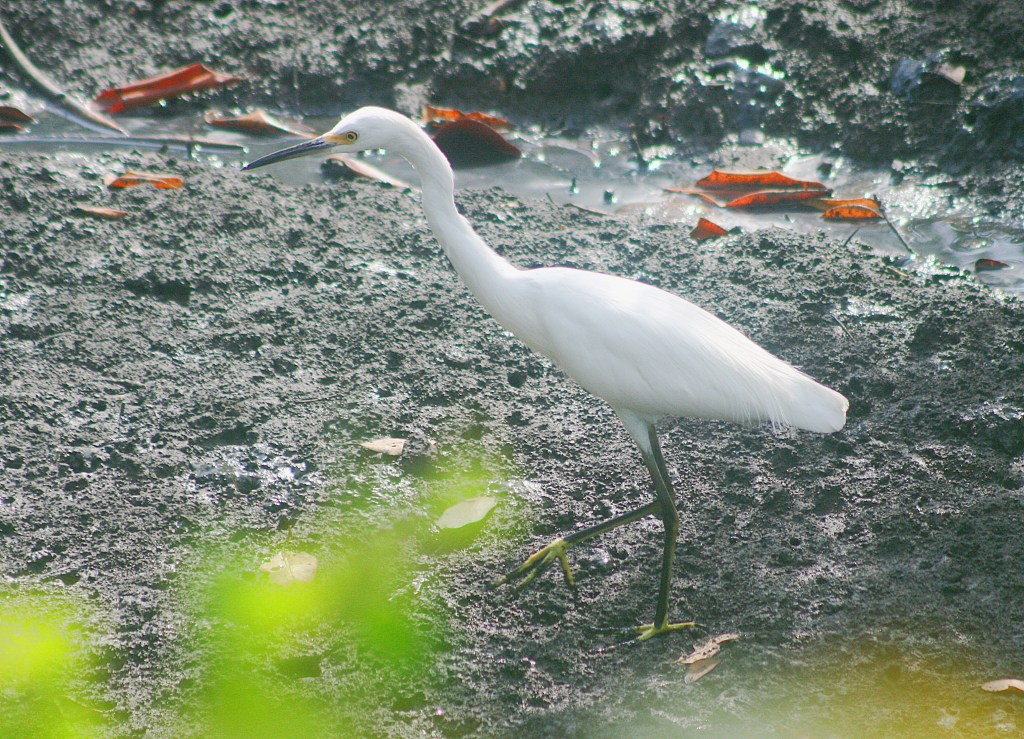
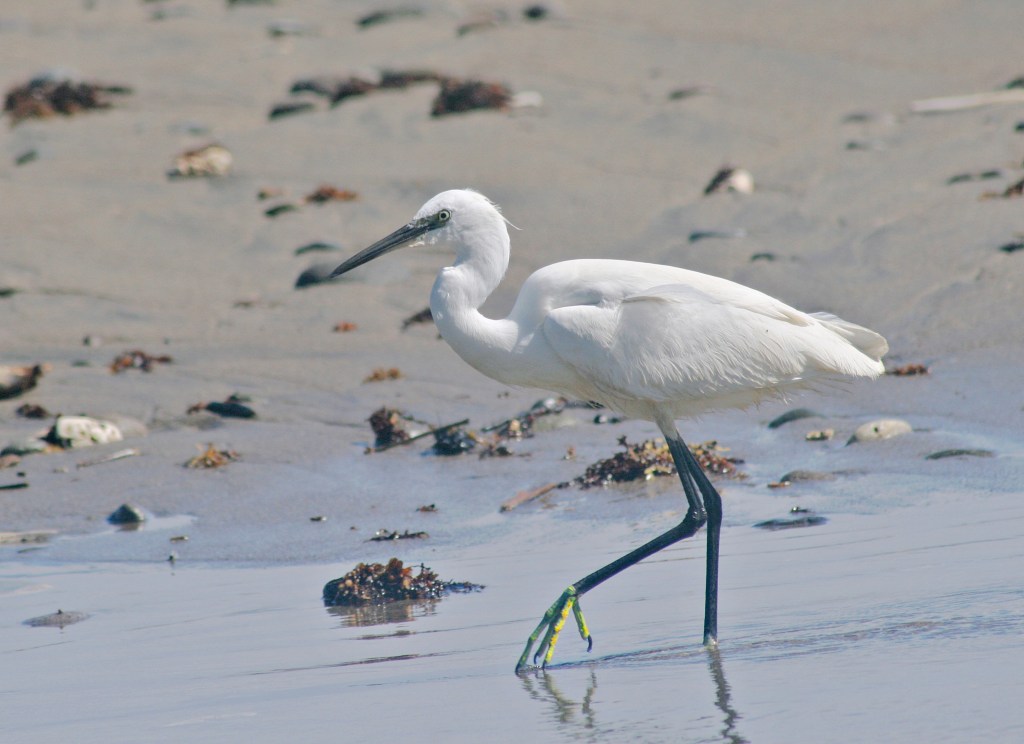
Littles and Snowies share many similarities, not just in appearance but also in behavior; both actively search for food, use various feeding techniques, and often gather in mixed flocks, especially in the early morning when fish are pushed to the surface of swamp pools due to low oxygen. As oxygen levels improve and fish swim away, these flocks break up, with Little Egrets often heading to the beach to feed alone.
Yet, despite their similarities, Little Egrets and Snowy Egrets have different feeding styles; Little Egrets feed more aggressively and use a wider range of foraging methods than Snowy Egrets. They are skilled at various techniques, such as stalking, snap-feeding, standing and waiting, open wing feeding, double wing feeding, and foot stirring. Additionally, they often steal food from other birds and follow them to take advantage of disturbed prey.
On land, they walk or run to catch prey, eat animals disturbed by livestock, pick insects from them, and scavenge when needed. Their diet mainly consists of fish, but they also eat amphibians, crustaceans, insects, worms, reptiles, and small mammals and birds. Little Egrets are good at taking advantage of whatever prey is available.

Little Egrets and Snowy Egrets often live near each other, but at feeding areas, Little Egrets usually dominate the smaller Snowy Egrets. They use aggressive movements to take over Snowy Egret feeding spots or steal their prey. However, during the breeding season, this hierarchy fades as both types of egrets defend their nests equally.
How to spot them
To spot a Little Egret in the Caribbean, carefully examine each Snowy Egret you see, as this can help you tell the two species apart. Little Egrets are often confused with Snowy Egrets due to their similar appearance, so take a photo for accurate identification later. Make sure to capture important details like the color of the lore, legs and feet, which can help resolve any confusion.
Explore your surroundings closely; Little Egrets live in shallow fresh and saltwater areas like brackish swamps, mangrove swamps, salt ponds, and sandy beaches, where they often search for food. Knowing their favorite habitats and behaviors can improve your chances of seeing them; watch how they hunt, as they patiently stalk and catch prey with great skill.


 BELA'S BIRDS