
"Yellow bird
Up high in banana tree
Yellow bird
You sit all alone like me
Did your lady friend leave the nest again?
That is very bad, Makes me feel so sad
You can fly away, In the sky away
You more lucky than me..."
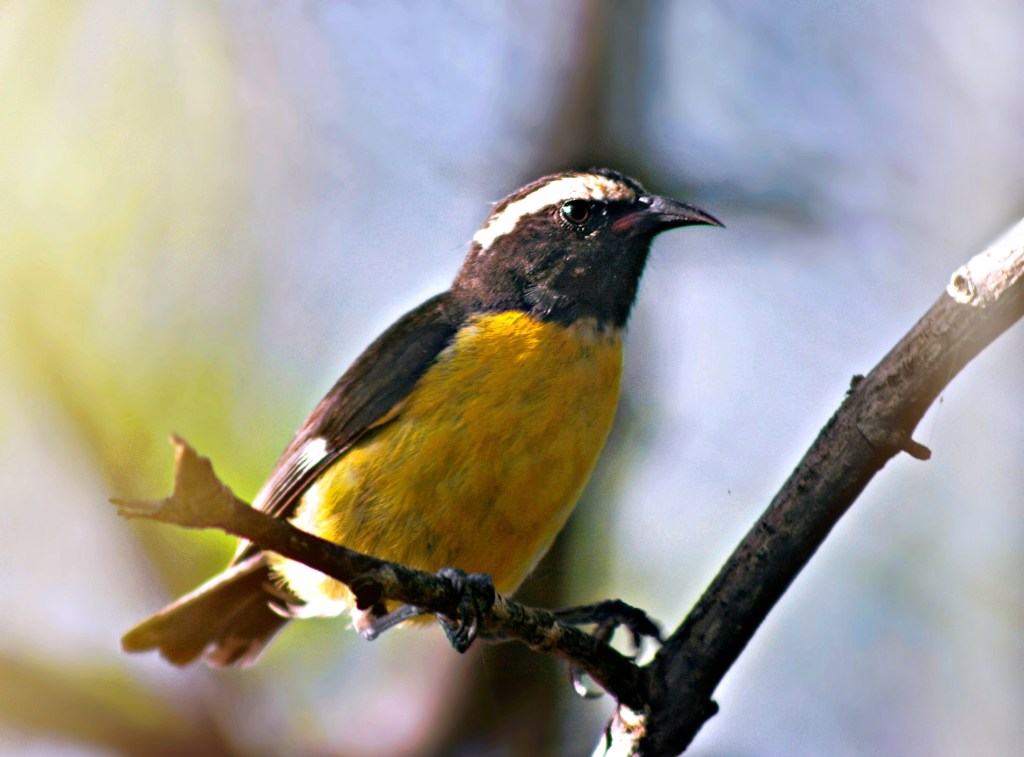
Did you know that the Bananaquit is the “yellow bird” featured in Harry Belafonte’s iconic calypso? Calypso, which started as a way for enslaved people to share their feelings during 19th-century colonial rule in the Caribbean, gave rise to sweet songs like “Yellow Bird,” celebrating a familiar and cherished animal in the Caribbean.
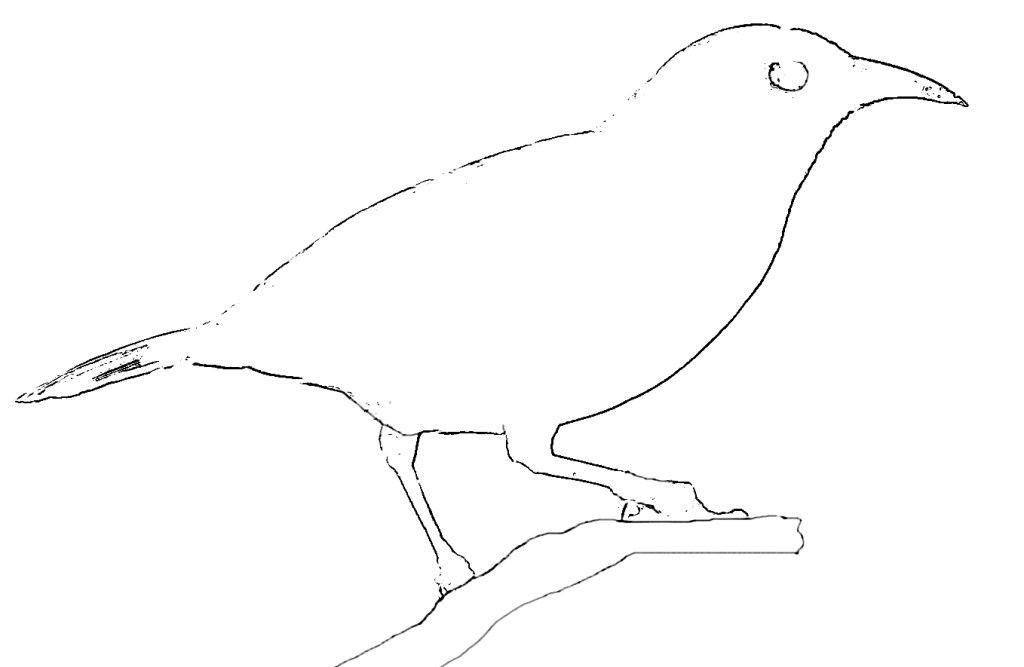
The Bananaquit is a creature of the American tropics where bananas thrive and blossoms abound throughout the year. Notably skittish and always on the move, this tiny bird is often seen feasting upon a banana tree, or darting from flower to flower, hopping and probing with quick, nervous movements, in search of sweet, precious nectar.
The term Bananaquit means “small banana bird,” showing its love for bananas. It is also called Banana Bird, Paw-Paw Bird, Yellow Breast, Marley-Quit, Bessie Bird, Beeny Quit, Si-Si Bird, and Sugar Bird, due to its fondness for nectar and sweet foods.
The typical adult Bananaquit, Coereba flaveola, is about 10 to 13 centimetres long (four to five inches) with a blackish mantle, bright yellow breast and belly, grey throat and large, white eyebrows. There are, however, many geographic variations, with at least 41 recognized subspecies that differ in bill length and color.
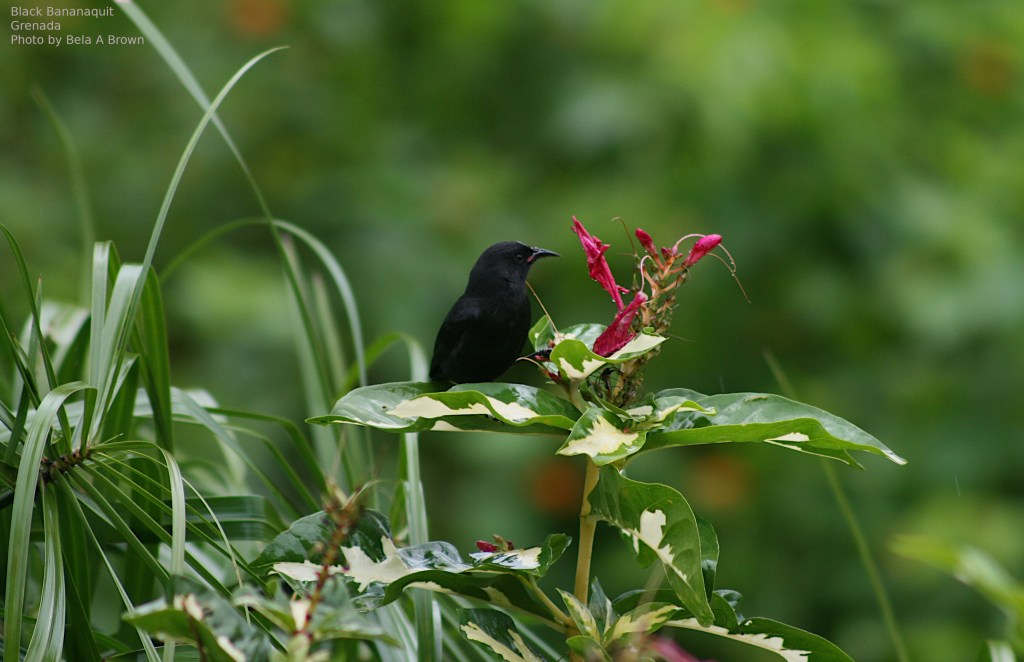
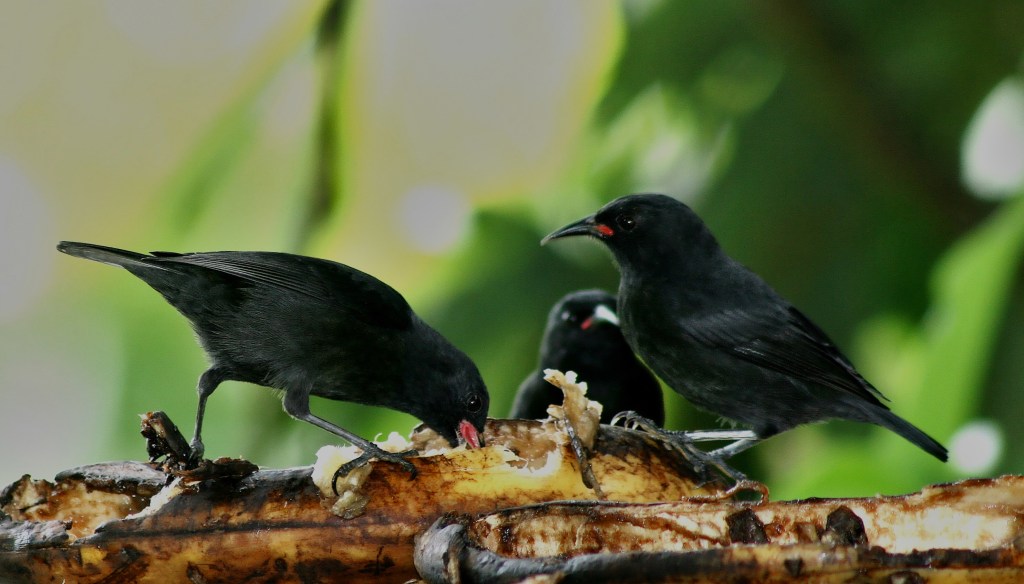
In Grenada and St Vincent, there are two color morphs living together—the popular “yellow breast” and a mostly black morph. Interestingly, on both islands, these morphs are found in different rainfall areas: the drought-resistant “yellow breast” thrives in dry places, while the “black morph” is mainly in wetter areas like rainforests. Since I live near the rainforest, I mainly see the black morph. Every day, many black bananaquits flock to our banana feeder, using their sharp beaks to pierce the banana skins and reach the sweet flesh within. They have a special affinity for banana blossoms and I often spot them hanging upside down, sipping the nectar from the large, tear-shaped flowers.

Bananaquits are found in Central and South America and the Caribbean, except Cuba and the Cayman Islands. They live in places like banana plantations, mangrove forests, gardens, parks, and other areas with plenty of fruit and flowers.
The species profits greatly from human proximity and is so well adapted to human environments that it can easily become tame, approaching humans at outdoor tables to take sugar from bowls, or even to sip from an unattended beer! Quite astonishingly some Bananaquit populations, for instance those in Tobago, have acquired a formidable taste for eight- to 12-proof alcoholic beverages, such as beer, and a most curious capacity to remain unaffected by it.
A regular visitor at hummingbird feeders, the sweet Bananaquit is not much bigger than a hummingbird, yet the way the two groups of birds feed is entirely different: the hummingbird feeds poised in midair, while the Bananaquit is bold and acrobatic, clinging to the stems of flowers at all possible angles. It feeds by thrusting its head between the petals, using its extendable forked tongue to extract the nectar stored within.
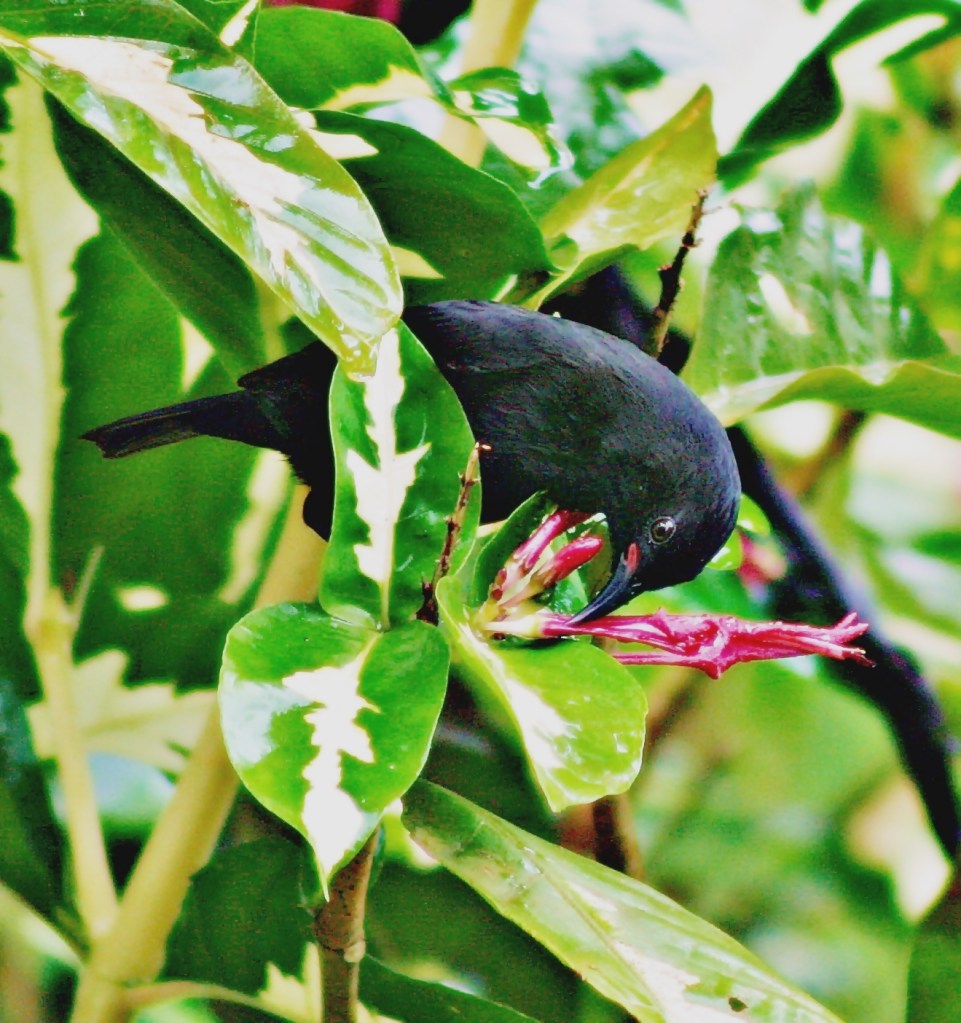
As a nectar feeder, it acts as a pollinator for small flowers, but blossoms with extremely long tubular corollas, whose nectar is beyond reach of the bird’s beak and tongue, are pierced by the sharp curved beak near the base and “robbed’’ of the nectar.
The Bananaquit supplements its diet with a few insects, ants, flies and insect larvae. It uses a technique called “gaping” to eat the inside pupae by piercing the casing, opening its bill slightly and licking the contents with its special forked tongue.
Bananaquits are often seen in pairs, or in larger groups when food is in abundant supply. The species forages at all levels, from ground flowers to the highest forest blooms, often mixing with tanagers, mockingbirds, bullfinches and warblers. Typically a very gregarious bird, the Bananaquit is a tiny bundle of energy — fast-paced, energetic, and noisy! It is a tireless ”talker” whose early morning chatter is one of our garden’s loudest cacophonies, as large numbers gather in the blossoming trees, chirping away to their hearts content.
The song of the male is a rapid series of sibilant, somewhat wheezy “sisisis” and “wizwiz-wiz sisisisi” while the female’s is a hurried, squeaky “tsip.” The song can be heard throughout the year and at any time of the day, varying with individuals, environment and geographical location. The male calls more frequently than the female and has the greatest song variation.
The Bananaquit is an industrious builder. This hard-working little bird builds nests all year around, not to breed in, but to sleep in. Both males and females build their own globular dormitories, which resemble breeding nests but are very much smaller and flimsier. An individual may have the same dormitory for months, or he may swap nest with his neighbor, but if the nest is lost to weather or another bird, the Bananaquit will quickly build another.
The Bananaquit breeding season is a loud affair, occurring throughout the year, but peaking with the rainy season’s first showers, typically the most productive flowering period and a prime time for insects.
The male attracts a mate by singing non-stop around the female’s dormitory. Once he has her attention, the pair initiates a courtship ritual that includes facing each other, bowing, scraping, and turning heads, often while holding nest material in the bill. The pair will then leave their individual dormitories to build a larger, more elaborate nest suitable to raise a family. The breeding nest is a well built, thick-walled globular structure, three times larger than a dormitory and constructed with a large amount of plant matter including dry grasses, twigs, soft leaves, feathers, banana leaf fiber and occasionally material stolen from other birds’ nests!
Constructing these nests requires considerable effort; for instance, some Bananaquit nests studied in Tobago were built using between 400 and 650 individual pieces of material! Featuring a high side entrance safeguarded by a protruding lip that leads into a snug, dark chamber below, the breeding nest is a marvel of avian architecture, taking around seven days to complete, compared to the mere hours needed for a dormitory!
The nest is carefully woven onto the tip of a slender branch, positioned about one and a half to 15 meters (five to 50 feet) above the ground. Whenever possible, Bananaquits build their nests close to wasp nests for extra safety from predators. Research indicates that Bananaquits nesting near wasp colonies have a higher success rate in raising chicks and keeping their partners.
Females typically lay two to three small eggs, which they incubate alone for approximately 14 days. During this incubation period, the female rests in the breeding nest while the male stays nearby in his own dormitory.
Although the majority of parental care is provided by the female, the male Bananaquit contributes by guarding his mate during incubation and helping to protect and feed the hatchlings with regurgitated food. The chicks primarily consume insects, which supply the essential protein needed for their rapid growth. The fledglings leave the nest at around 15 to 18 days old, disappearing into the foliage and emitting squeaky calls to prompt their parents to bring them food.
The fledglings are never invited to use their parents’ dormitories and instead are left to sleep outside until they find an abandoned nest or learn to build their own. Not surprising, these youngsters are remarkably successful at survival — at three weeks old they are fully independent, bravely clambering through the vegetation, probing the flowers for nectar, peering boldly into crevices for insects, or eagerly joining a gang of other Bananaquits to devour a bunch of ripe bananas.

 BELA'S BIRDS