
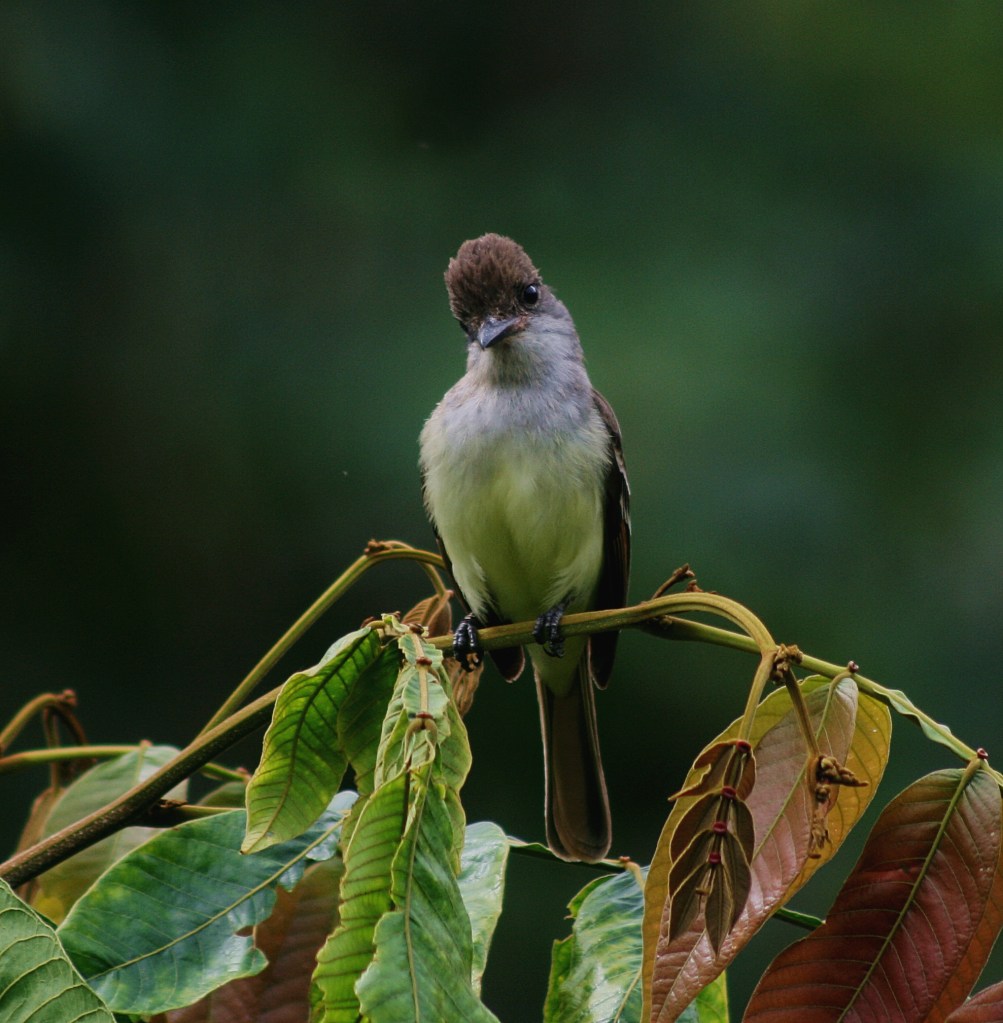
Every year, a pair of Grenada Flycatchers makes their home in a trunk cavity of our Ice Cream Bean tree. The first sign of their presence is a somewhat mournful “quip…quip…quip…quip…” — a sound so pure that it resembles raindrops softly falling on a tranquil pond.
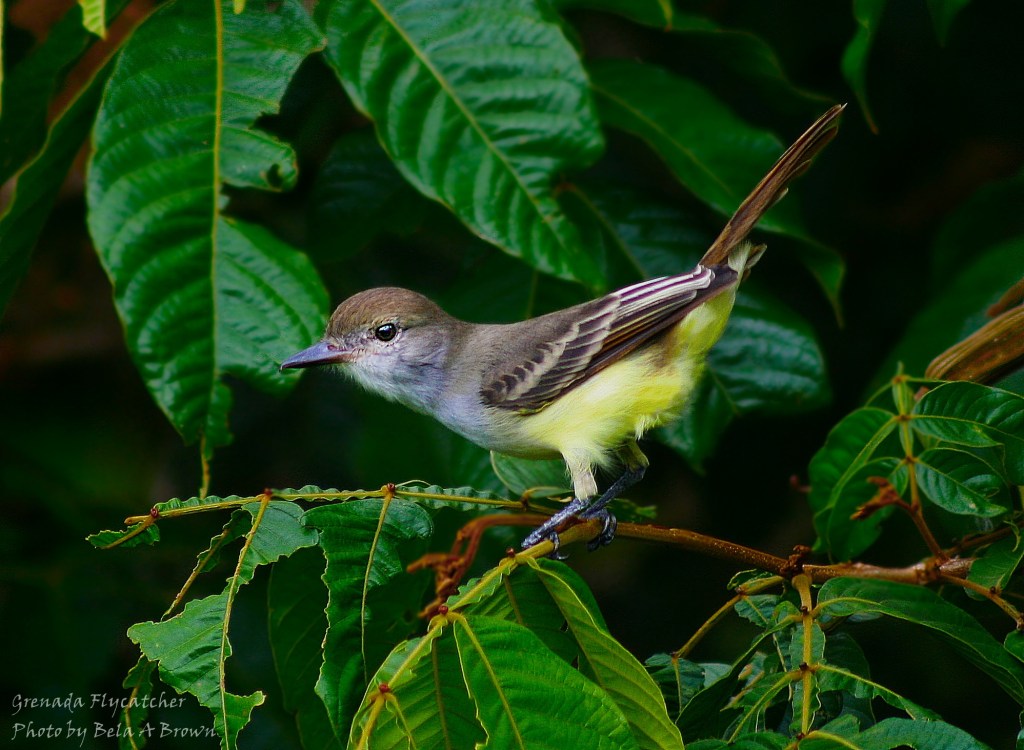
Grenada Flycatchers (Myiarchus nugator) are only found in the southern Lesser Antilles. They are unique to Grenada and nearby St. Vincent and the Grenadines, where they take the place of the similar Lesser Antillean Flycatcher (M.oberi). Grenada Flycatchers are easily identified in their habitat by their unique vocalizations, rust-colored half crest, and lemon-yellow belly, which have inspired local names like Loggerhead and Sunset Bird.
Grenada Flycatchers are sizable birds belonging to the Myiarchus group, commonly referred to as crested flycatchers. Initially, they were perceived as a variation of the Brown-Crested Flycatcher (M. tyrannulus) found in the southern United States and South America, largely due to their similar appearance, apart from the Grenada Flycatcher’s distinctive bright orange mouth. Nevertheless, they react negatively to each other’s calls, and mitochondrial DNA analyses confirm they are separate species.
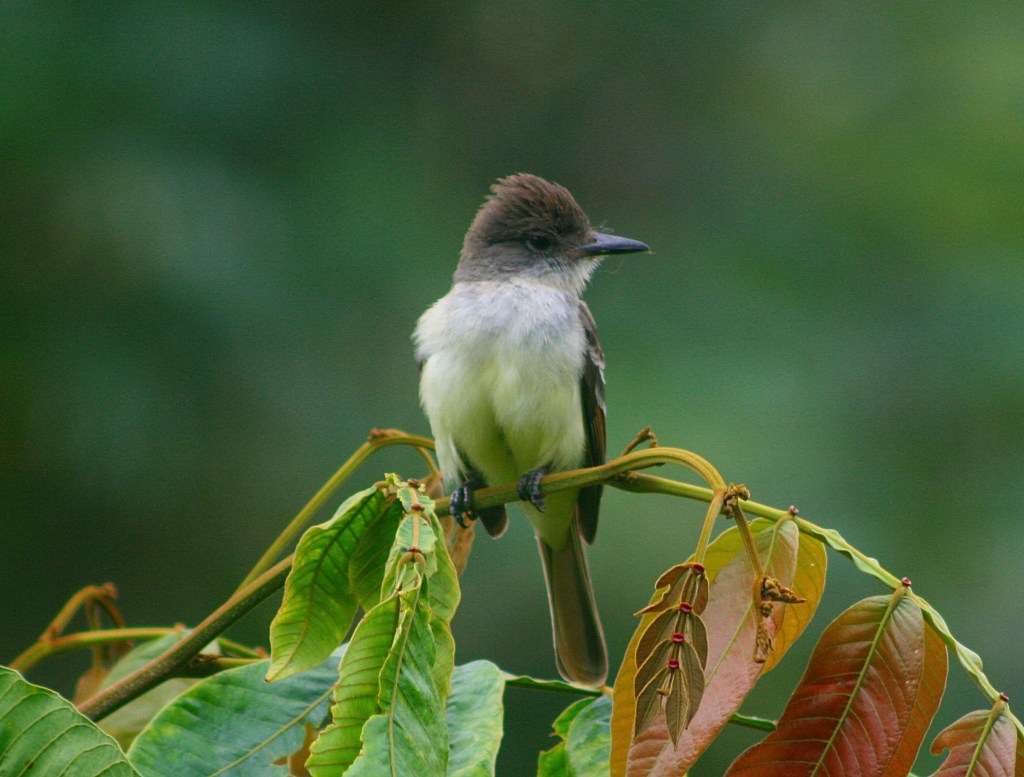
Grenada Flycatchers are found from sea level to 900 meters, favoring dry forests, open fields, and places close to human activity. Although often observed close to the ground, they seldom land, snatching their prey in mid-flight. They are friendly and generally untroubled by humans.
While there is not much known about their breeding behavior, every year in March and April, I watch these flycatchers during their breeding season, and sometimes they watch me back; motionless, their heads slightly tilted, quietly observing me. Looking into their deep, almond-shaped eyes, I whimsically ponder if they are as captivated by my presence as I am by theirs — most probably not. Sometimes, we remain locked in our mutual observation, both seemingly too relaxed to move. Then, as if suddenly stirred from a dream, the flycatcher bursts into the air and vanishes into the foliage to casually continue its daily activities.
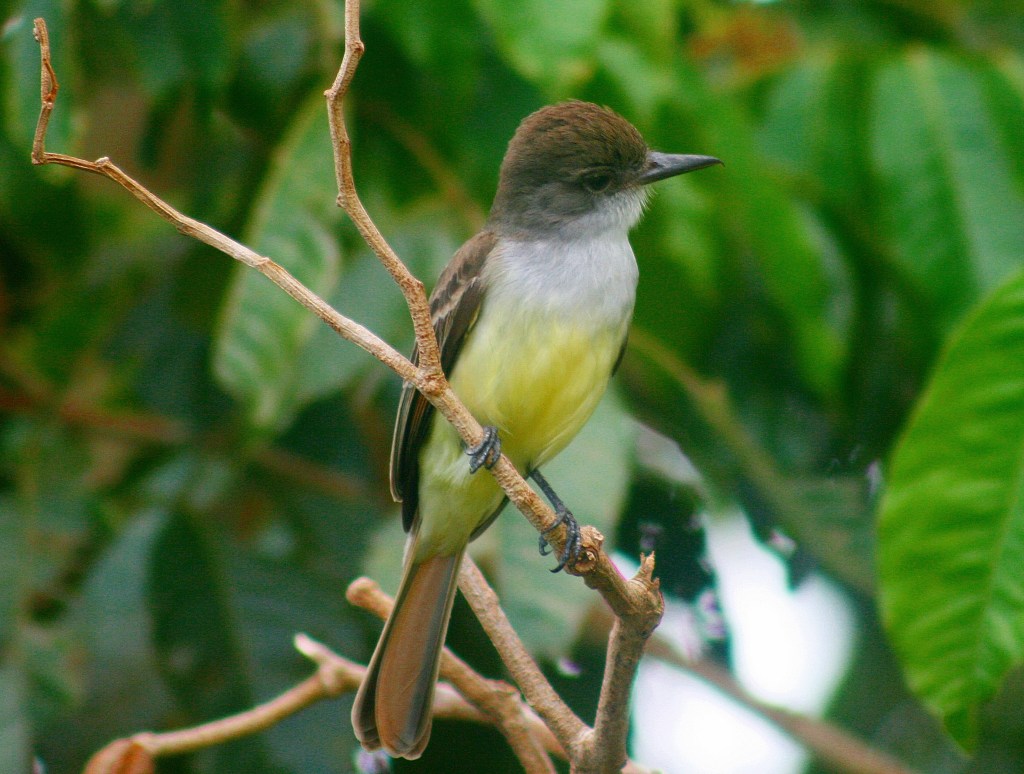
Grenada Flycatchers are monogamous and pairs may remain together for several seasons.
The males start the season by singing a lovely pre-dawn song to mark their territory, featuring a series of sad “quips” that get progressively louder, ending with a clear “beeu-bee-wheéu!” Waking up to their song is a unique experience. The sound is both simple and uncannily beautiful, stopping abruptly as the night ends and the new dawn begins.
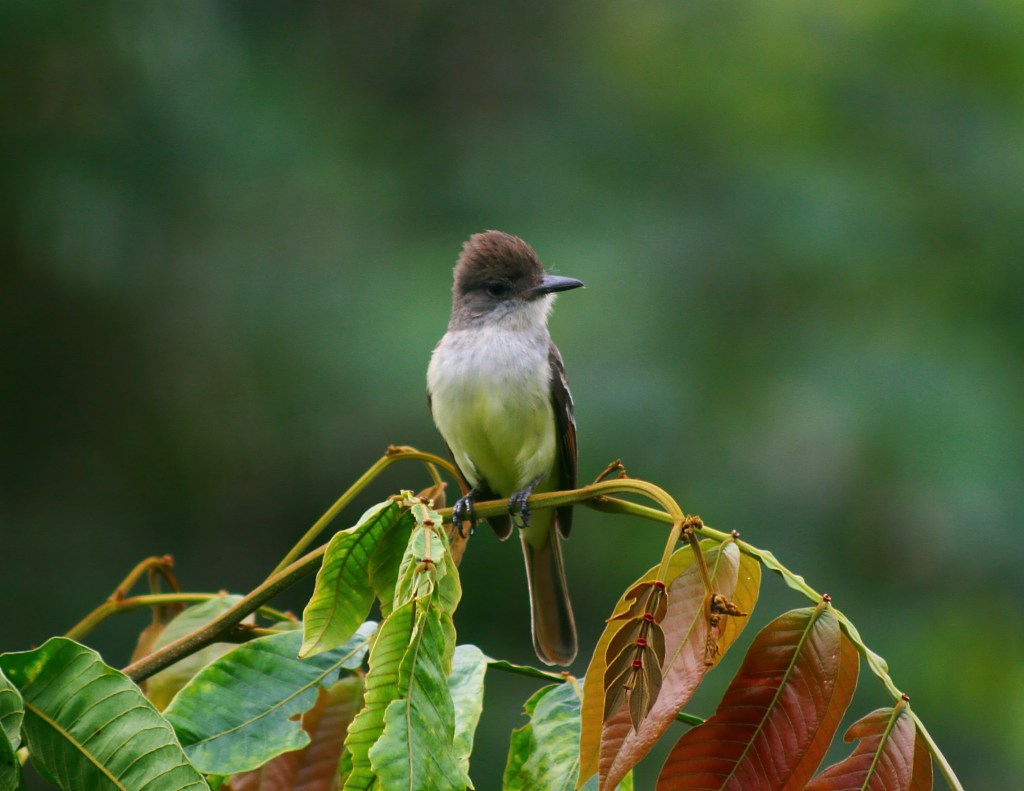
Once paired, the male takes the female for a tour around his territory while both birds vocalise intensely, calling out a jubilant “free-free-free” and “frrr-reereeree- free!” The male is more vociferous, while the female takes over the back vocals.
After fluttering noisily about the garden for a few days, the pair will then settle in their perfect hole and the male begins delivering dry plant matter into the nest cavity. At the end of each delivery, he flutters back onto a branch overlooking the entrance to the hollow and “quips” satisfied, as his mate replaces the old with new soft furnishings.
The center of the nest contains various materials like soft straw, garden string, dried leaves, animal fur, and feathers. Sometimes, cloth, human hair, and reptile skin are also used. Grenada Flycatchers are cavity nesters and may use small natural holes in trees or man-made structures like pipes, masts, and sailing boat booms.
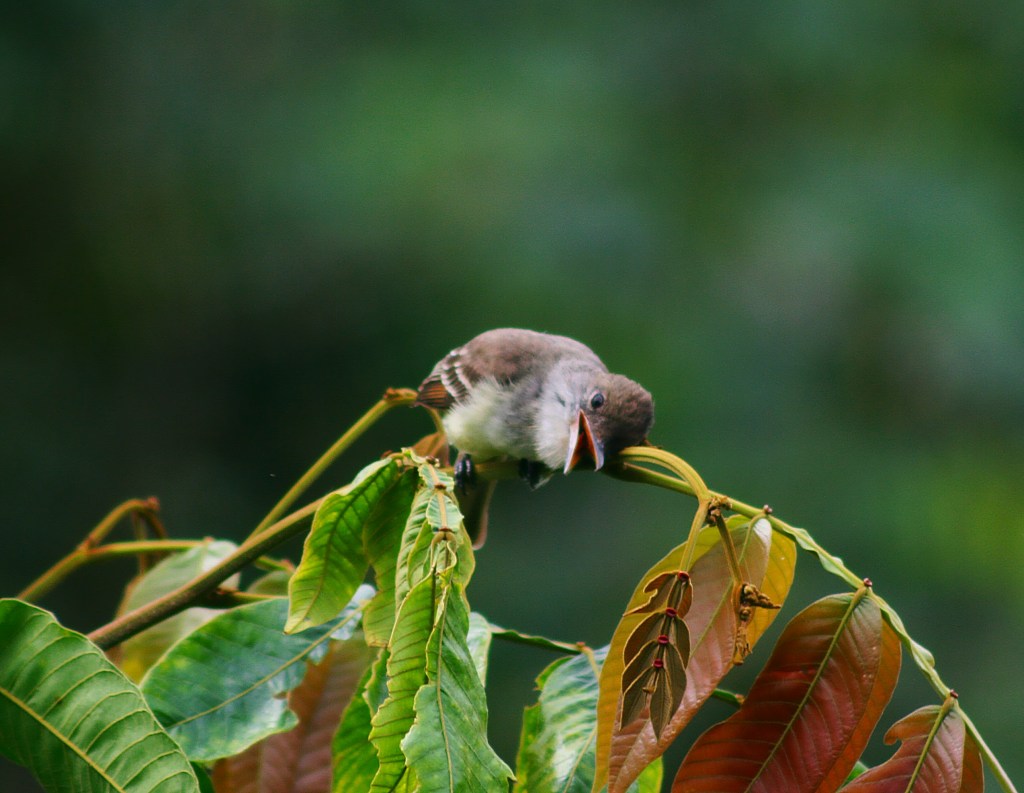
Once the nest is done, the female lays two to four eggs and incubates them alone for about two weeks. The male protects the nest from dangers, especially the Shiny Cowbird. I’m not sure when incubation starts, but hatching is marked by a shift in behavior, with both adults bringing food to the nest and softly communicating with their chicks. The chicks respond with “sis-sis-sis,” while the adults remain quiet to avoid attracting predators.
Fed on insects, the baby birds in our Ice Cream Bean tree grow quickly, and by about 15 days old, they leave the nest and spread out across the tree limbs like flying confetti. The young family soon flies away, with the parents calling for their excited chicks. Even though they can fly now, the fledged chicks will still be fed by their parents for another month or until they can find food on their own.
As I watch their departure, a mix of sadness and hope washes over me. Witnessing the nesting cycle of the Grenada Flycatcher is an experience I look forward to each year. To see the chicks’ first flights and perceive their eager anticipation of a life on the wing is nothing short of wondrous. As I watch the young Grenada Flycatchers leave their birthplace, I wonder if these young Sunset Birds will make it to adulthood and raise their own families. I would like to think so, because as the sun rises over the horizon bringing new opportunities, so are all beginnings filled with hope.

 BELA'S BIRDS